Essential Plumbing Maintenance Tips for Your Home
Keeping your plumbing system in good condition can help prevent expensive repairs, water damage, and unexpected emergencies. A few simple maintenance habits can go a long way toward protecting your home and keeping everything flowing properly year-round.
Whether you’re a homeowner, property manager, or business owner, these plumbing tips can help you avoid common issues and extend the life of your plumbing system.
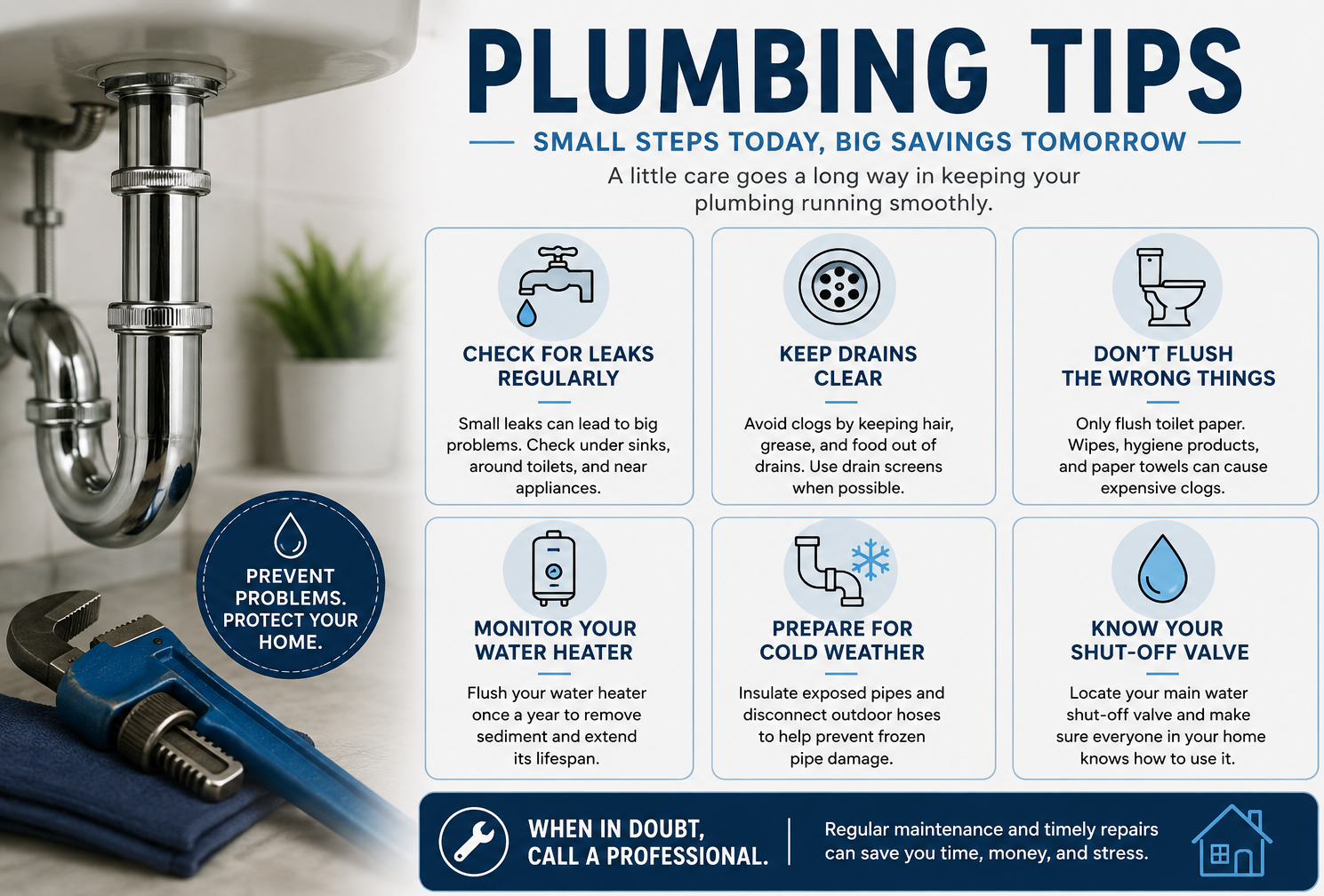
1. Check for Leaks Regularly
Even small leaks can waste a surprising amount of water and lead to costly damage over time. Make it a habit to inspect:
- Under sinks
- Around toilets
- Water heater connections
- Outdoor hose bibs
- Exposed water lines
Signs of hidden leaks may include:
- Higher water bills
- Water stains
- Mold or mildew smells
- Low water pressure
Catching leaks early can save thousands in future repairs.
2. Be Careful What Goes Down the Drain
One of the most common plumbing problems is clogged drains. To help prevent backups:
Avoid putting these items down drains:
- Grease or cooking oil
- Coffee grounds
- Eggshells
- Food scraps
- Hair
- Wipes (even “flushable” wipes)
- Paper towels
- Hygiene products
Using drain strainers in sinks and showers can also help reduce buildup.
3. Know Where Your Main Water Shut-Off Valve Is
In a plumbing emergency, shutting off the water quickly can minimize damage significantly.
Every homeowner should know:
- Where the main shut-off valve is located
- How to turn it off
- How to shut off water to individual fixtures
This simple knowledge can make a huge difference during a burst pipe or major leak.
4. Flush Your Water Heater Annually
Sediment naturally builds up inside water heaters over time. If left untreated, it can:
- Reduce efficiency
- Increase energy bills
- Shorten the lifespan of the unit
- Cause strange noises or heating issues
Having your water heater flushed regularly helps maintain performance and reliability.
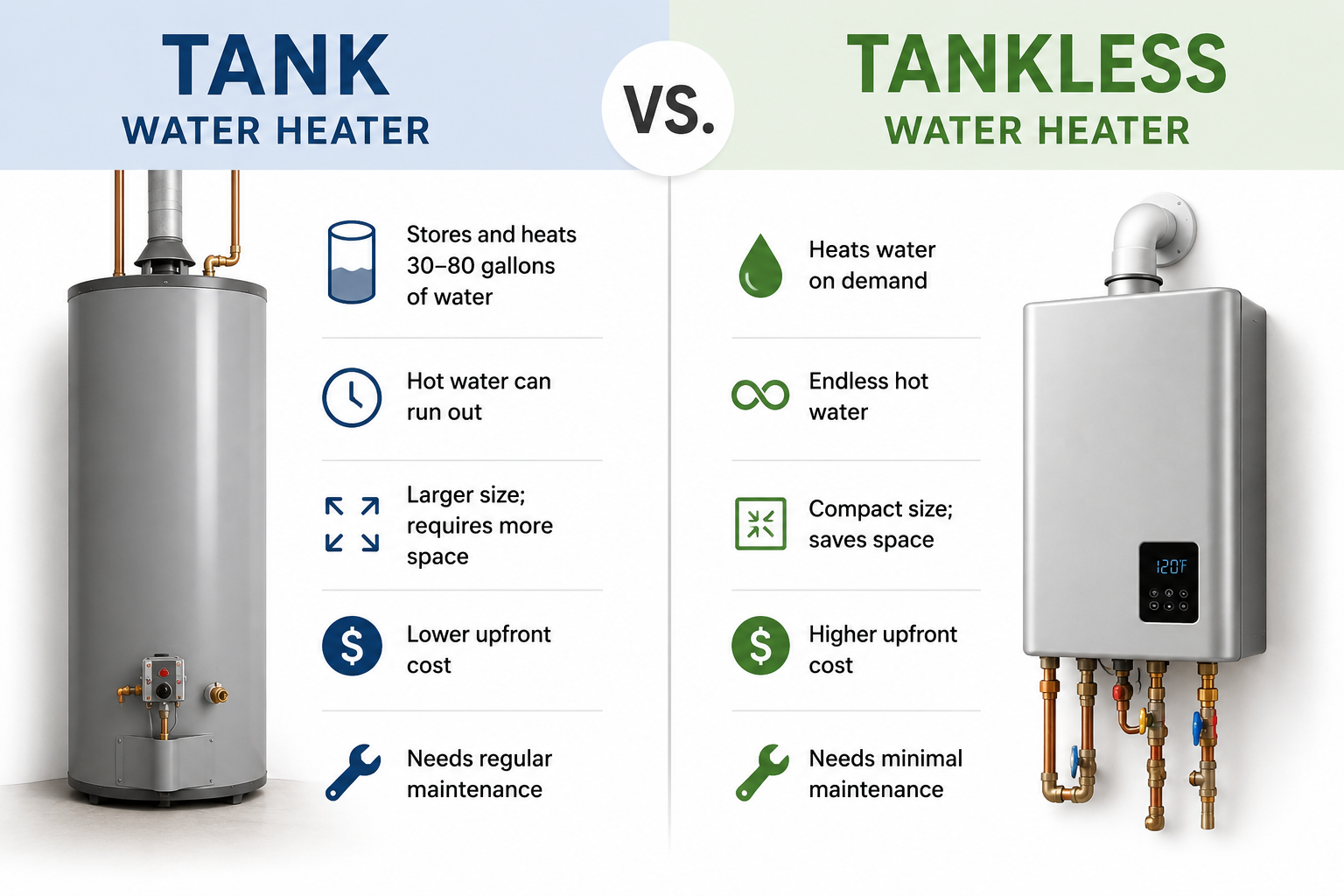
Tankless water heaters also require periodic maintenance and descaling to operate properly.
5. Protect Pipes During Cold Weather
Freezing temperatures can cause pipes to burst and create major water damage.
To help prevent frozen pipes:
- Insulate exposed piping
- Disconnect garden hoses
- Keep cabinets open during freezes
- Let faucets drip during extreme cold
- Seal gaps around pipes entering the home
Preparing ahead of winter can help avoid expensive emergency repairs.
6. Don’t Ignore Slow Drains
A slow drain is often an early warning sign of a blockage developing inside the line.
Ignoring the issue can eventually lead to:
- Full drain backups
- Sewer odors
- Overflowing fixtures
- Pipe damage
Addressing drainage issues early is usually much less expensive than waiting until the line completely stops up.
7. Schedule Routine Plumbing Maintenance
Routine plumbing inspections can help identify problems before they become emergencies.
Preventative maintenance may include:
- Leak inspections
- Water heater maintenance
- Drain evaluations
- Backflow testing
- Pressure checks
- Fixture inspections
Regular maintenance helps improve efficiency and extends the life of your plumbing system.
Final Thoughts
Plumbing problems often start small and gradually become larger, more expensive issues over time. Staying proactive with maintenance and addressing problems early can save money, reduce stress, and help protect your property.
If you notice leaks, drainage problems, sewer odors, water heater issues, or low water pressure, it’s always best to have the system inspected before the issue worsens.
Reliable plumbing starts with proper maintenance, quality repairs, and attention to the small warning signs before they become major problems.
You might also like