Choosing between a traditional tank water heater and a tankless water heater is one of the most common questions homeowners ask when upgrading their plumbing system. Both options have advantages depending on your home, budget, water usage, and long-term goals.
Understanding the differences can help you make the best decision for your property and avoid unnecessary expenses down the road.
What Is a Traditional Tank Water Heater?
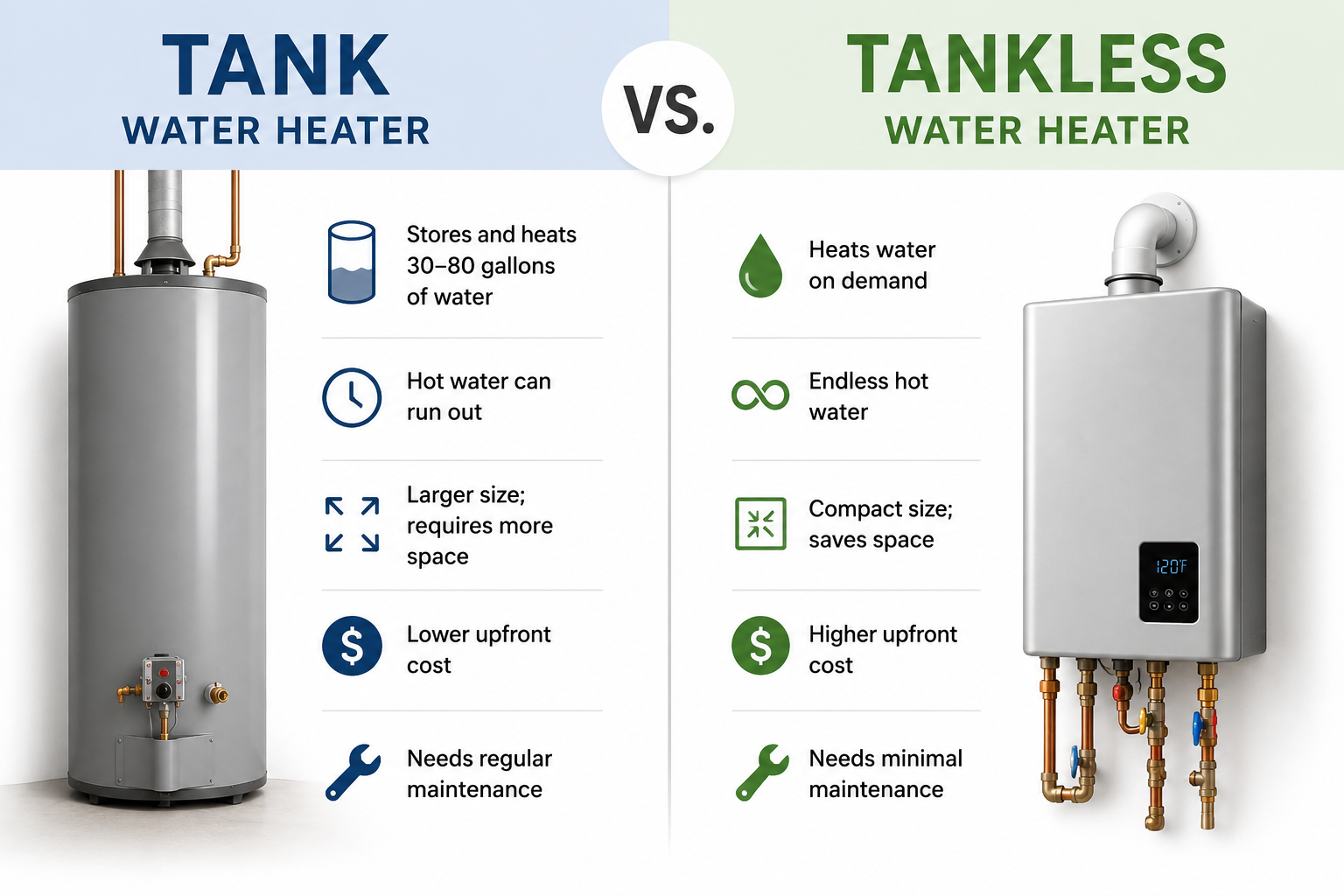
A traditional tank water heater stores and heats water inside a large insulated tank. Most residential units range from 30 to 50 gallons, though larger models are available for bigger households.
When hot water is used, the tank refills and reheats automatically.
Benefits of Tank Water Heaters
- Lower upfront installation cost
- Simpler installation process
- Reliable performance
- Easier replacement when existing connections already match
- Lower repair costs in many situations
Potential Drawbacks
- Limited hot water supply
- Higher energy usage from continuously heating stored water
- Larger physical footprint
- Typically shorter lifespan than tankless units
Tank water heaters are often a great option for homeowners looking for affordability and straightforward installation.
What Is a Tankless Water Heater?
Tankless water heaters heat water on demand instead of storing it in a tank. When a hot water fixture turns on, the unit rapidly heats water as it passes through the system.
This allows for continuous hot water without running out of stored supply.
Benefits of Tankless Water Heaters
- Endless hot water when properly sized
- Higher energy efficiency
- Smaller space-saving design
- Longer lifespan in many cases
- Reduced standby energy loss
Potential Drawbacks
- Higher upfront installation cost
- More complex installation requirements
- May require gas line upgrades or electrical modifications
- Annual maintenance and flushing are important
- Higher repair costs for certain components
Tankless systems are popular for homeowners wanting improved efficiency and long-term performance.
Which Water Heater Is Better?
The answer depends on your specific needs.
A Traditional Tank Water Heater May Be Better If:
- You want lower upfront costs
- Your household has moderate hot water usage
- You need a quick replacement
- Your current plumbing setup already supports a tank unit
A Tankless Water Heater May Be Better If:
- You want maximum efficiency
- You need continuous hot water
- You want to save space
- You plan to stay in the home long-term
- You are interested in lower long-term energy consumption
Both systems can work extremely well when installed correctly and properly maintained.
Importance of Proper Installation
No matter which type of water heater you choose, proper installation is critical for:
- Safety
- Efficiency
- Longevity
- Code compliance
- Reliable performance
Incorrect sizing, poor venting, improper gas pressure, bad water connections, or inadequate maintenance can all lead to major problems over time.
Working with a qualified plumbing professional helps ensure the system is installed correctly and safely.
You might also like